
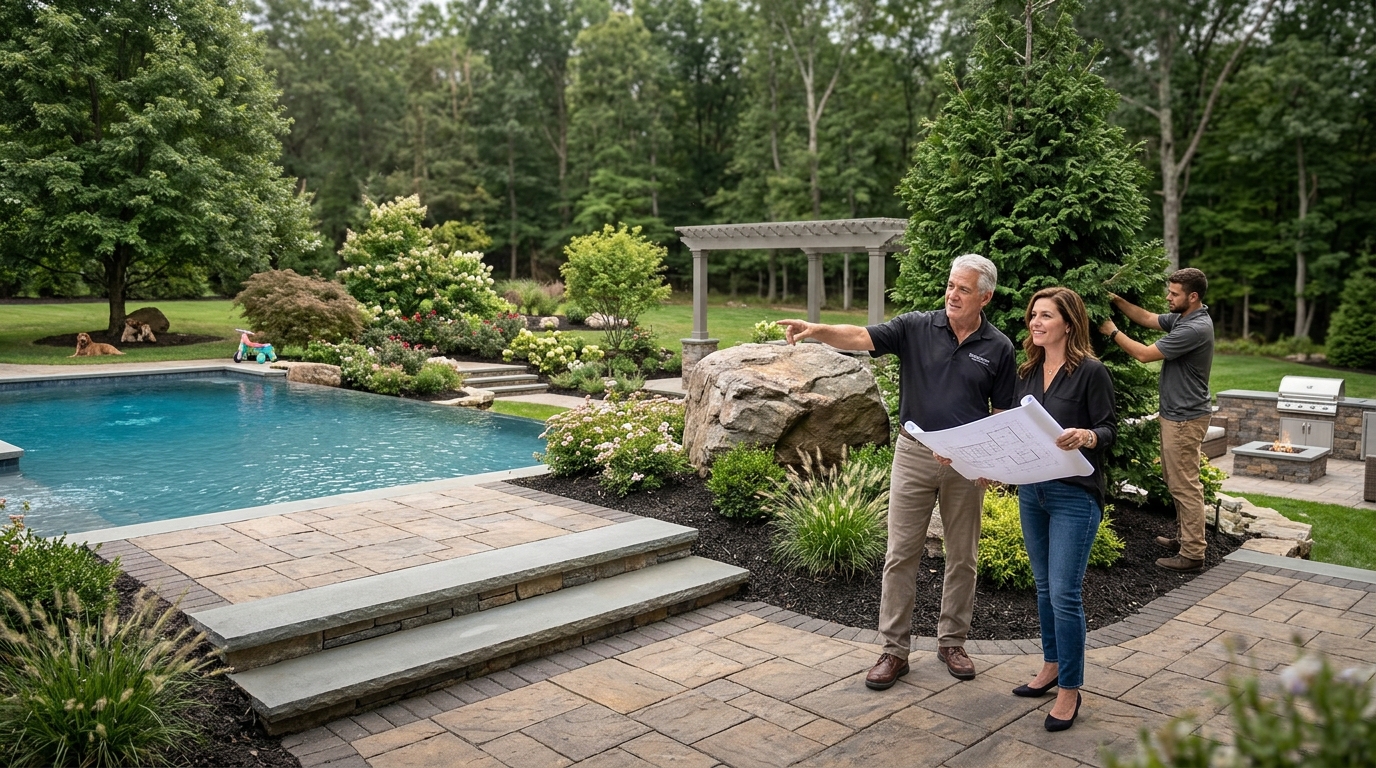
Full property landscape design is a comprehensive planning process that integrates hardscape, softscape, and structural elements to create a cohesive outdoor environment. Unlike basic planting services, this approach treats the entire property as a unified system. This guide covers how to identify designers who manage complete site transformations, focusing on hardscape elements, site master planning, and design-build services.
Hardscape Elements
Hardscape is the non-living structural component of a landscape, including patios, walls, and walkways. These elements define the functional zones of a property and provide the foundation for outdoor living. A designer who handles full property design must possess deep expertise in masonry and structural engineering to ensure these features are both durable and aesthetically pleasing.
Structural Integrity and Materials
Professional designers select materials based on soil composition, drainage patterns, and architectural style. They utilize engineered and natural stone to create custom structures that blend form with function. This includes retaining walls that manage grading and patios that extend the living space of the home. according to Choosing a Landscape
Integration with Softscape
True full property design does not treat hardscape in isolation. Designers integrate stone and paver work with plantings to create a seamless transition between built and natural elements. This ensures that the structural components enhance the landscape rather than dominating it.
Site Master Planning
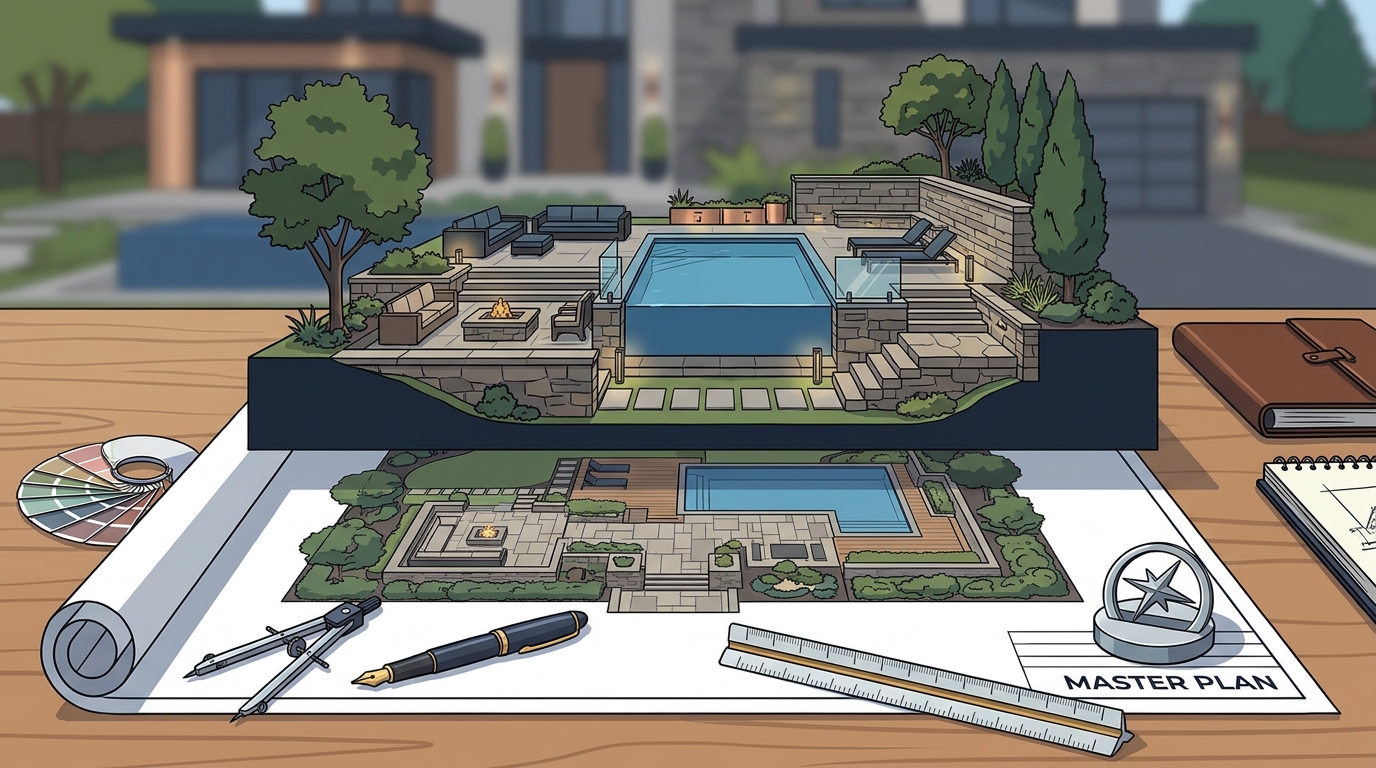
Site master planning is the strategic analysis of a property’s topography, sun exposure, and existing infrastructure. It serves as the blueprint for all subsequent design decisions. This phase ensures that every feature, from a pool to a garden bed, contributes to a unified vision.
Topographical Analysis
Designers evaluate the natural contours of the land to determine the best placement for structures. They address challenges such as uneven terrain or limited access points by designing terraced gardens or multi-level patios. This approach maximizes usable space while respecting the natural environment.
Long-Term Vision
A comprehensive plan balances immediate needs with future growth. It considers how plantings will mature and how hardscape will weather over time. This forward-thinking approach prevents disjointed additions and maintains the integrity of the overall design. according to RCW 36 70a
Design Build Services
Design build services is a project delivery method where a single firm manages both the design and construction phases. This model eliminates the gap between concept and execution, ensuring that the final result matches the client’s vision. It streamlines communication and reduces the risk of errors or cost overruns.
Streamlined Communication
With a design-build team, the client works with one point of contact throughout the project. This clarity ensures that design intent is accurately translated into construction details. It also allows for real-time adjustments during the build process.
Efficiency and Precision
Design-build firms use precise templates and 3D modeling to guide construction. This minimizes trial-and-error adjustments and reduces rework. The result is a smoother, faster build with fewer surprises for the homeowner.
Key Takeaways
- Full property design integrates hardscape, softscape, and structural elements into a cohesive system.
- Hardscape expertise is critical for creating durable and functional outdoor structures.
- Site master planning analyzes topography and sun exposure to guide design decisions.
- Design-build services streamline the project by combining design and construction under one roof.
- Professional designers use 3D modeling to visualize the final project before construction begins.
- Long-term planning ensures that the landscape evolves gracefully over time.
- Choosing a firm with experience in both design and construction reduces project risks.
Frequently Asked Questions
What is the difference between landscape design and landscape construction?
Landscape design focuses on the planning and aesthetic vision, while construction involves the physical building of the project. Full property design firms often handle both, ensuring the vision is executed accurately.
Why is site analysis important in landscape design?
Site analysis evaluates soil, drainage, and sun exposure. This information is essential for selecting appropriate plants and placing structures to ensure longevity and functionality.
How does 3D design benefit a landscape project?
3D design allows homeowners to visualize the final project from every angle. It enables real-time adjustments to materials and layouts, reducing uncertainty and speeding up decision-making.
What are hardscape elements in a landscape?
Hardscape elements are non-living structures such as patios, walls, and walkways. They define the functional areas of the outdoor space and provide structural support for the design.
Can a landscape designer handle both residential and commercial projects?
Yes, many experienced firms handle both. Commercial projects often require additional considerations for durability and public use, which skilled designers are equipped to manage.
How long does a full property design project take?
The duration varies based on complexity and scale. A comprehensive project involving hardscape and plantings can take several months to complete, depending on the scope of work. according to RCW 36 70a